How the Chornomorka Restaurant Chain Is Building IT Infrastructure for 50+ Locations in Ukraine and Europe
Data Transmission ChannelCorporate InternetIT
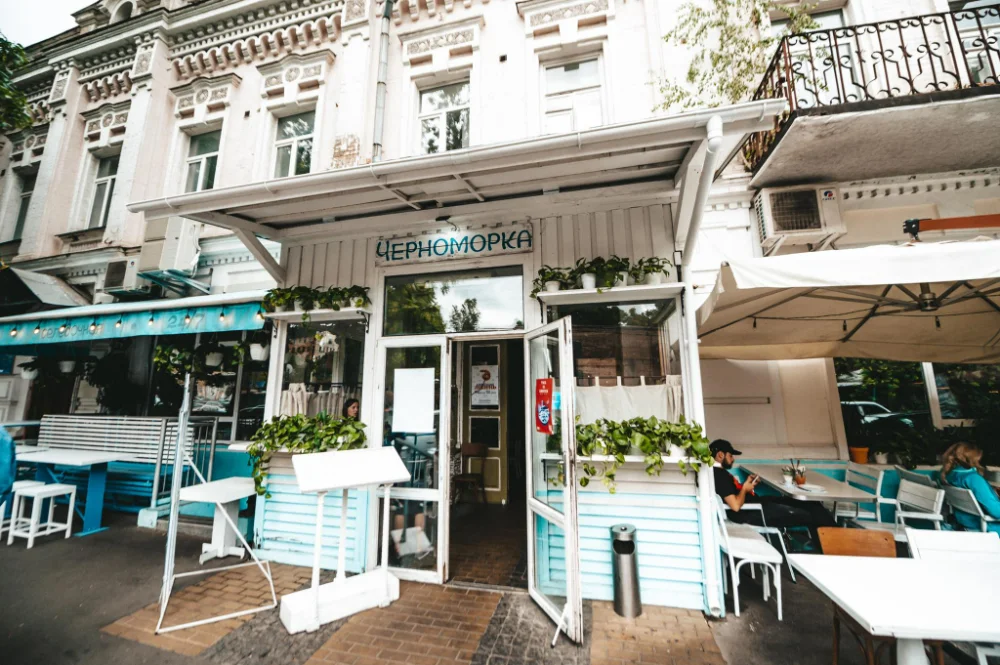
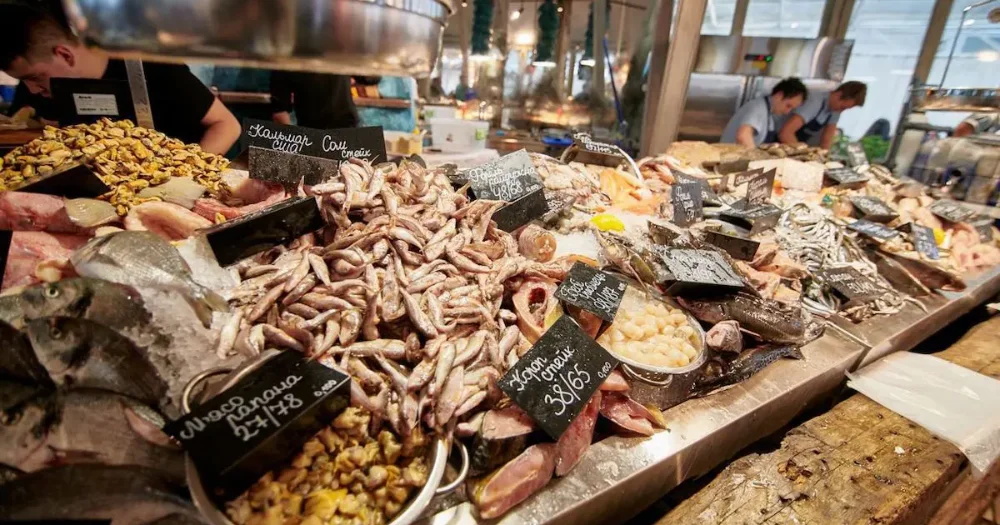
Chornomorka is one of Ukraine’s best-known restaurant brands. For guests, it is primarily a place for seafood and a lively atmosphere. Behind the scenes, however, there is a large-scale infrastructure that supports the operation of the entire network.
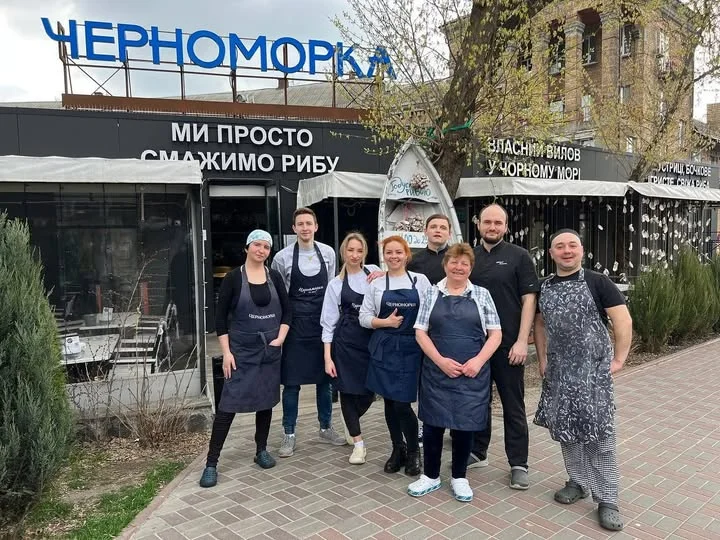
One of its key components is the IT team, whose role is no less important than the kitchen itself. In this case study, we explain how the team works, what challenges it solves, and why the reliability of the communication channel has become a strategic issue.
A network that keeps growing
Today, the Chornomorka network includes 35 restaurants in Ukraine and 17 in other European countries, and the company plans to continue expanding the network and entering new regions in the near future. Chornomorka is actively engaging new partners, enabling rapid scaling through a franchise model.
Each new market brings not only additional scale, but also specific requirements: regulatory environments, payment systems, and operational processes differ significantly from country to country. As a result, any solution requires local adaptation.
This is compounded by the dynamics of the restaurant business itself: seasonality, food trends, and guests’ sensitivity to external events. All of this requires IT systems to be both stable and flexible.
The restaurant business is fascinating. It is constantly facing challenges and requires fast, creative solutions, as well as testing hypotheses that deliver results. This creates an unconventional view of standard processes. That is why building systems for restaurants has a significant creative component. At Chornomorka, we do a lot to strengthen our identity and uniqueness even amid war, shelling, and energy challenges — so that we can provide our guests with the best product, says Valentyn Bohachov, IT Director of the Chornomorka Group.
It is under these conditions that the company is building a unified IT ecosystem that must operate equally reliably across all markets.
An IT ecosystem that keeps the network together
The network’s team is actively working across several areas: cloud services, secure corporate networks, and integrations with aggregators such as Glovo and Bolt.
One of the key elements of this ecosystem is the POS system. It is the foundation of the entire network’s operations and is closely integrated with the group’s products.
Information security is another separate and important area: protection against DDoS attacks, access control, and monitoring of external threats.
This entire ecosystem is managed by the IT team from the central office. This allows the company to maintain unified quality standards across the whole network, while also placing strict requirements on connectivity between locations and the center.
Architecturally, the system is built on the principle of a geo-cluster with full data duplication: servers are located at sites in the EU and Ukraine, synchronized with each other into clusters, and support one another in real time.
I support geo-distributed infrastructure with replication, so that our products and services have the highest possible fault tolerance. We have server capacity at sites in the EU and Ukraine. They are duplicated and connected through a secure channel. This guarantees that our IT products will continue to operate even in the event of local failures, notes Valentyn Bohachov.
Reliable internet is the basis of operational continuity
A stable connection in restaurants supports the entire operational chain: order processing, cash register and fiscal operations, inventory management, and interaction with suppliers.
Without internet access, all these processes become critically more difficult. The group’s back office is also put at risk, as management decisions there are made based on data from the locations. Any disruption in this data flow immediately affects the quality of analytics, as well as the accuracy and speed of decision-making.
Internet connectivity in restaurants is a strategically important component of the overall system for our operational and management activities. It is important to me that a telecommunications partner can cover our needs. A high level of fault tolerance is the main thing I expect from an internet provider, and GigaTrans delivers on this 100%, emphasizes the Head of IT at the Chornomorka network.
That is why the group’s telecommunications infrastructure was built on the same principles as its server one: reliability and redundancy.
Each location is connected through secure VPN channels, ensuring constant communication with servers and the central office.
A partnership that withstood the blackouts
The company has clear requirements for providers: SLA, high-quality technical support, sufficient geographic coverage, and the ability to quickly connect new locations as the network expands.
GigaTrans meets all our standards. For me, this is not just an internet provider — it stands for high-quality partnership and a strong level of trust, proven over time, says Valentyn Bohachov, IT Director of the Chornomorka network.
Today, GigaTrans provides connectivity for seven Chornomorka locations. According to Bohachov, the real test of this cooperation came in winter during mass power outages. While electricity across Kyiv was disappearing for 10-15 hours at a time, the locations connected to GigaTrans maintained stable connectivity.
In winter, when we had prolonged blackouts, I would go to one of our restaurants to work. I was confident that I would have internet access, so I could fully plan my work and meetings. GigaTrans is a provider that operates reliably even under extreme conditions, says Valentyn Bohachov.
As the network expands, the requirements for infrastructure will continue to grow. That is why the reliability of the telecommunications partner remains one of the key factors in the stable operation of the entire group’s restaurant network.