Novyi Zir and Excimer are powerful network-based structures represented by modern ophthalmology centers across Ukraine.
Every day, hundreds of patients undergo eye examinations and treatment here. To ensure smooth operations, in addition to a perfectly organized medical process, the group has implemented a complex IT ecosystem that must operate without disruption.
In this article, we explain how the team manages to maintain stable operations despite the war and blackouts, and what role telecommunications services play in this process.
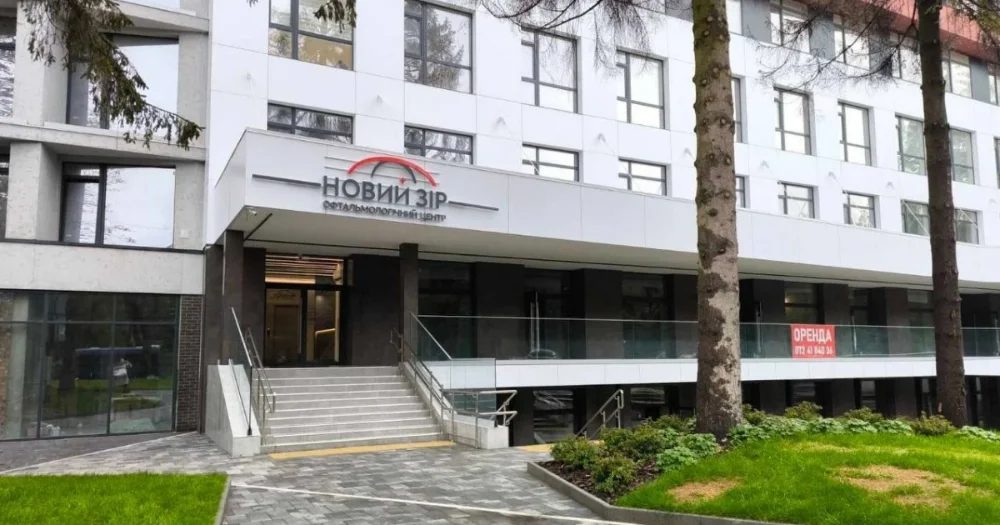
How a clinic network operates across the country
Novyi Zir and Excimer are two medical networks within one group of companies. The group also includes the Novyi Zir optical retail network. Today, it comprises 12 facilities in Kyiv, Vyshneve, Lviv, Khmelnytskyi, Cherkasy, Kryvyi Rih, Dnipro, and Odesa.
Behind the stable operation of the companies is a highly professional IT team based at the central office in Kyiv. IT Director Oleksandr Kostiuchenko joined the company two years ago with a clear goal: to organize processes and make service delivery transparent and predictable.
I was brought in to systematize IT processes, build the right team, and ensure that services are delivered predictably – so that everything is clear, logical, and transparent for our employees, says Oleksandr Kostiuchenko, IT Director of the Novyi Zir and Excimer group of companies.
One of the key decisions was to centralize IT support. There are no separate specialists in the regions — all issues are resolved remotely from Kyiv. This approach requires flawless communication channels between locations and the central data center.
The heart of the group’s IT ecosystem is the Medical Information System, or MIS, which is used to manage patient records, create doctors’ schedules, and process all medical data.
Alongside it, the group uses:
- Active Directory to manage workstations and access rights;
- IP telephony for the call center, including operators and a chat aggregator;
- accounting systems for bookkeeping and reporting;
- monitoring and Service Desk systems;
- Google Workspace for email and document management.
All these systems must operate without interruption, because any downtime means the inability to admit a patient, process a payment, or issue a refund. This creates not only financial losses, but also reputational risks.
Data transmission channels are second only to electricity in importance
Amid war and constant blackouts, the Novyi Zir team has established a clear operating principle: any location may be lost at any moment.
The entire IT architecture is built around this principle — with no local storage of critical services, maximum remote support, and reliable connectivity between clinics and the data center.
After electricity, this is the most important thing right now. Given the concept that any location may be lost, we can’t keep the services needed for clinic operations locally. In addition, we have our core system. We can’t split it into parts and keep each one in a separate clinic. That is exactly why we need reliable, high-quality data transmission channels, says Oleksandr Kostiuchenko.
The main connection between the clinics and the data center is implemented through VPN tunnels — permanent channels through which data is transmitted, work in the MIS is carried out, and remote support is provided.
To ensure resilience, each location is also connected to two providers. This is necessary for reliable access to the data center and the operation of all key systems, as well as for comfortable internet use by patients and staff.
Why Novyi Zir chose GigaTrans
The Novyi Zir team has clear requirements for a provider: a formalized SLA must be in place. According to Oleksandr Kostiuchenko, most Ukrainian operators are filtered out at this stage. After that comes the real test — service quality in day-to-day operations.
Oleksandr learned about GigaTrans by chance, through an internet search. He reviewed the available information, spoke with a manager, connected a trial location, and evaluated the quality of the connection and support.
The result was the gradual connection of all key locations. Today, six of the group’s locations are already connected to the provider’s network: Odesa, Kryvyi Rih, Khmelnytskyi, Kyiv, Lviv, and Vyshneve.
A particularly telling case for the IT Director was the connection of several new locations in winter, at the height of power outages. Despite the difficulties caused by blackouts, the GigaTrans team handled the process quickly and without unnecessary complications for the client.
For me personally, everything was as simple as possible: I wrote to the manager saying that we had these locations. The next day, they confirmed that the engineers had checked the technical feasibility of the connection, agreed on the price — and then we launched the work, recalls the IT Director of Novyi Zir and Excimer.
Oleksandr also highlights the customer-focused approach of manager Natalia. If a question goes beyond her area of competence, she does not redirect the client to a technical specialist, but instead gathers the answer herself and passes it on.
Since we started working with GigaTrans, the locations connected through your network have been operating, if not perfectly, then as close to perfect as possible. I have no complaints about the services or quality. The only thing I regret is not moving absolutely all of our locations to you in the summer, concludes Oleksandr Kostiuchenko, IT Director of the Novyi Zir and Excimer group of companies.